
INKOVEMA Podcast „Well through time“
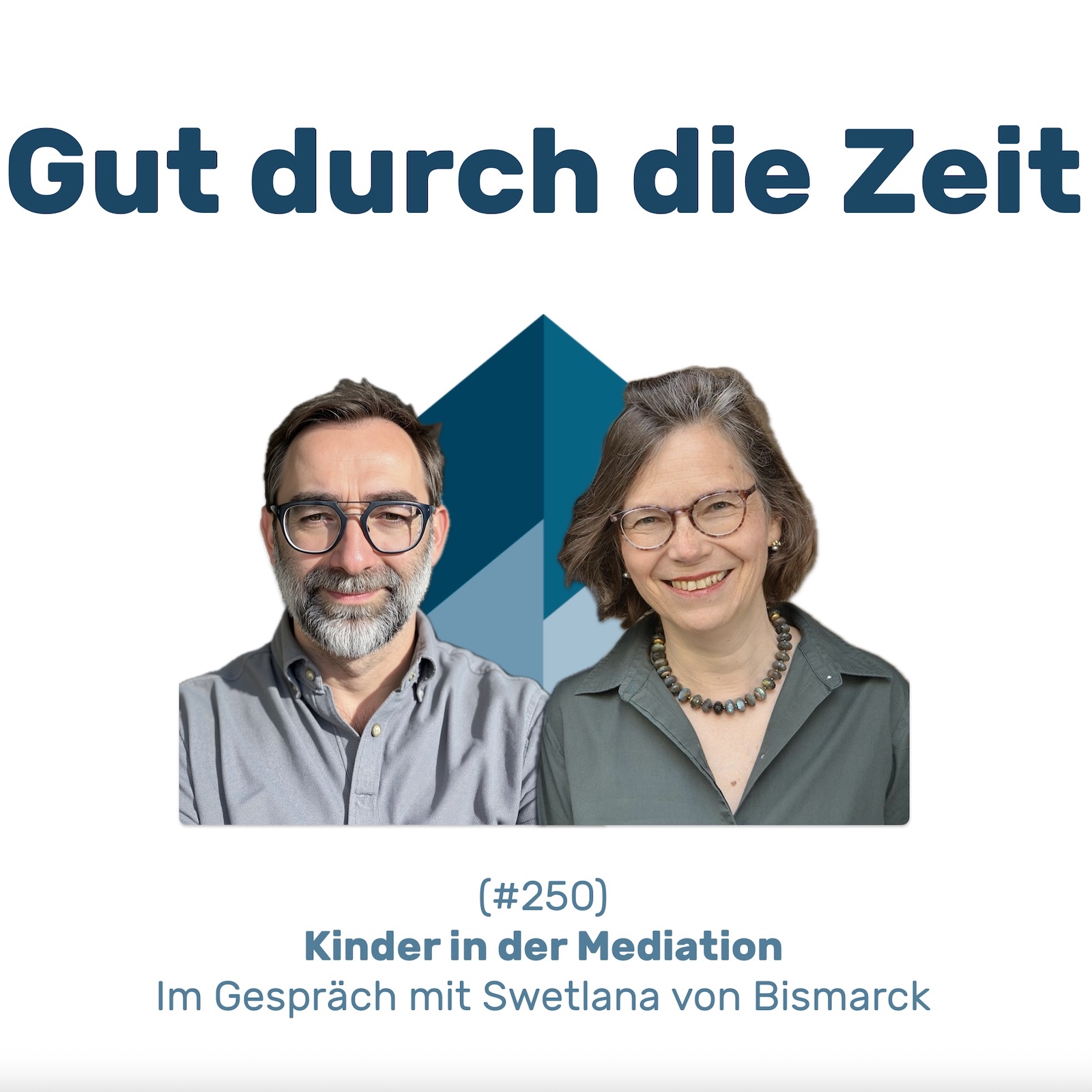
#250 GddZ
Children in mediation
Preparation for mediation is crucial for success.
In conversation with Swetlana von Bismarck
Lawyer, licensed family mediator (BAFM) and founder of the mediation practice Family cocoon in Berlin.
She works as a mediator, guardian ad litem and supervisor and has been supporting families in highly sensitive conflict and change processes for many years.
Small series: Fields of mediation
Contents
Chapter:
Chapters
00:00 Introduction to mediation and family conflicts
02:54 The role of the mediator and her experiences
04:46 Family and its importance in conflicts
06:57 Children in mediation: demarcation and inclusion
08:46 Minor children as participants in mediation
09:50 Emotional intelligence of children in conflicts
11:38 Nest model and child participation
13:35 Voluntariness and confidentiality in mediation
14:52 Criteria for the inclusion of children
17:57 Role change and stability of parents
21:23 Conflict dynamics and topics in mediation
23:17 Parental conflicts and couple conflicts
25:31 Effects of the age of majority on mediation
26:17 Integration of children in mediation
28:41 Challenges and opportunities of child mediation
33:24 Preparation for mediation with children
36:29 Mandatory mediation and its effects
41:15 Normalisation of separations and divorces
Summary
In this podcast, Sascha Weigel and Swetlana von Bismarck discuss the role of children in mediation, particularly in cases of separation and divorce. Swetlana, an experienced family mediator, explains how important it is to include children in the mediation process in order to take their perspectives and needs into account. She talks about the challenges and opportunities that arise from involving children and emphasises the need for careful preparation and a respectful attitude towards the children. The podcast also highlights the differences between minor and adult children in mediation and the importance of voluntariness and confidentiality.
Takeaways
- Conflicts are a normal occurrence in life.
- Mediation is a process that promotes understanding and conflict resolution.
- The diversity of perspectives is crucial for conflict resolution.
- Good cooperation requires active negotiation of differences.
- Conflict counselling is a highly responsible activity.
- The 7i model offers a systematic approach to conflicts.
- Power plays a central role in conflict situations.
- Conflicts should not be seen as negative, but as an opportunity for development.
- Communication is the key to conflict resolution.
- An interdisciplinary approach enriches conflict management.

Leave A Comment